

You have felt it before. You give up your seat on a crowded bus, or carry a neighbour's groceries up the stairs, and something inside you settles. Your shoulders drop. The day feels lighter than it did a minute ago.
That feeling is not your imagination being generous with you. It is biology.
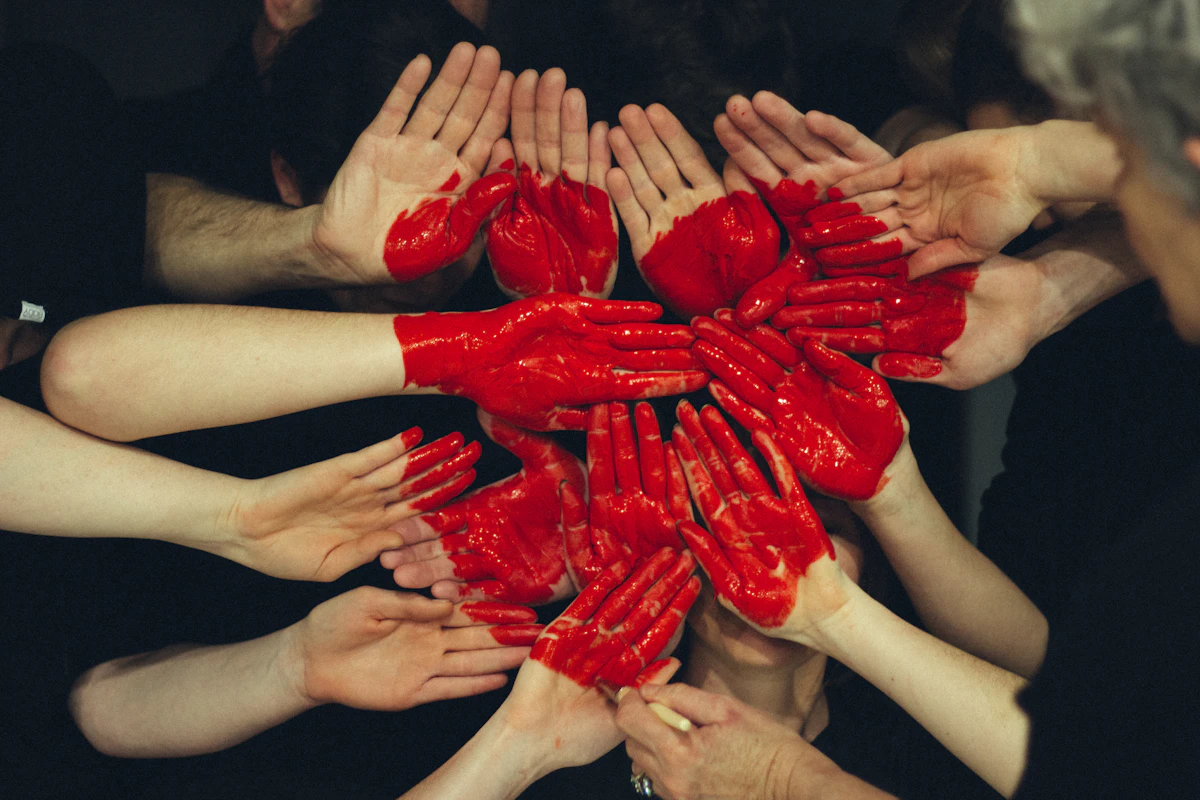
At Positive Nation we talk a great deal about kindness as a choice, something you decide to do. But kindness is also something that happens to you, in your bloodstream and your nervous system, the moment you extend it to someone else. Understanding what is going on inside you turns kindness from a nice idea into something you can reach for on purpose, especially on the days you need it most.
The Helper's High Is a Real, Measured Thing
In the late 1980s a researcher named Allan Luks surveyed thousands of regular volunteers and asked them a simple question: how do you feel when you help someone? The answers were remarkably consistent. People described a distinct physical rush at the moment of helping — warmth, energy, a sense of calm afterwards. Luks called it the helper's high, and the name stuck because so many people recognised the sensation the instant they heard it described.
What he had found was that helping someone produces a response closer to exercise than to duty. Not the quiet satisfaction of having done the right thing, but something immediate and physical.
Kindness does not only change how someone else's day goes. It changes what is happening inside the person offering it.
What Your Body Actually Does
Four things happen when you act kindly toward another person, and they happen quickly.
Your brain releases dopamine. This is the same reward chemistry involved in eating a good meal or hearing a song you love. Brain imaging studies have shown the reward centres lighting up when people give to a cause — in some cases more brightly for giving than for receiving.
Oxytocin enters the picture. Often called the bonding hormone, oxytocin rises during warm social contact. It is associated with feelings of trust and closeness. It is also thought to expand blood vessels, and researchers have linked it to lower blood pressure and a calmer cardiovascular system. This is part of why a genuinely kind exchange can leave you feeling physically steadier, not just emotionally better.
Serotonin steadies your mood. Alongside dopamine and oxytocin comes serotonin, which helps regulate mood. Dopamine delivers the first burst of good feeling; serotonin is linked to the calmer, longer-lasting sense of peace that stays with you after the moment itself has passed.
Your stress response quiets down. Acts of kindness are associated with reduced cortisol, the hormone your body produces under pressure. Turning your attention outward, even briefly, interrupts the loop of worry that keeps stress hormones circulating.
None of this requires a grand gesture. The research consistently finds these effects in small, ordinary acts — the kind available to anyone, on any day, without money or planning.
Over the longer term, people who volunteer regularly have lower levels of CRP (C-reactive protein), a marker of inflammation in the body.
Why Giving Beats Receiving
One of the most striking findings in this field is how well giving compares to being given to.
In a well-known study published in Science in 2008, researchers gave participants a sum of money and instructed some to spend it on themselves and others to spend it on someone else. At the end of the day, the people who had spent it on others reported greater happiness. The amount did not matter much. The direction did.
Other work has pointed the same way over longer timeframes. Research on older adults has found that those who regularly provided practical help to others showed better health outcomes than those who did not — an association that held even after accounting for how healthy people were to begin with.
This runs against a quiet assumption many of us carry: that looking after ourselves first is the efficient path to feeling well. The evidence suggests something more interesting. Attending to someone else appears to be one of the more reliable ways of attending to yourself.
Kindness Is Contagious, and That Is Measurable Too
Something else happens that you never see. Studies of cooperative behaviour have found that a single act of generosity tends to ripple outward — the person you helped becomes more likely to help someone else, who in turn helps another. Researchers have tracked this spreading across several rounds of interaction between people who never met.
Witnessing kindness has an effect of its own. Psychologists use the word elevation for the warm, moved feeling you get watching someone act generously, and elevation makes the observer more likely to behave generously themselves. So the person you help is not the only one affected. So is whoever happened to be standing nearby.
It is a genuinely hopeful piece of science. The reach of a small kind act is almost always larger than the part of it you can see.
Simple Ways to Put This to Work
- Choose direct contact over distance. The effects are strongest when you can see the person you are helping.
- Spread it out rather than saving it up. Several small acts across a week appear to do more for wellbeing than one large act in a single day.
- Vary what you do. Repeating the identical act loses its effect over time; changing it keeps it alive.
- Notice it happening. Taking a moment to register the feeling strengthens it, and makes you more likely to reach for it again.
- Use it on hard days. The instinct on a low day is to withdraw. The evidence suggests a small outward act is one of the faster ways to shift how you feel.
Final Thoughts
There is something reassuring in knowing that kindness is built into us this deeply. Not as a rule we are asked to follow, but as something our bodies actively reward, as though we were designed on the assumption that we would look after one another.
You do not need to be in a good mood to begin. That is rather the point: the act tends to come first, and the feeling follows. A message to someone who has gone quiet. A word to a stranger having a hard morning. A few minutes of real attention for a friend.
Small, ordinary, and considerably more powerful than it looks. 💙